

AGRICULTURAL RESOURCES
This page brings together information, shared learning, and resources relevant to farmers navigating flood risk, drainage, and collaboration in the Fraser Valley. It includes themes emerging from past dialogues, educational resources, forum materials, and links to information that may be useful in exploring practical approaches to flood resilience.
Message from Our Agricultural Representative

"We all depend on this landscape. The opportunity is to bring practical farming knowledge together with Indigenous leadership to find solutions that work for everyone"
Dave Zehnder, Rancher
Farmers want food production recognized as part of flood resilience
Farmers have consistently raised that protecting agricultural land and supporting food production should be central to flood resilience planning — not treated as a secondary consideration.
Farmers want collaboration that delivers practical value
Many farmers are open to collaboration when it leads to better outcomes — whether that means smoother project development, access to funding, shared learning, or practical improvements on the ground. Recent forums have shown growing interest in approaches that bring farmers, First Nations, and other partners together around shared challenges.
What this tells us
Farmers are not asking for one single solution.
They are asking for practical tools, better coordination, and a stronger role in shaping how flood risk is managed across the floodplain.
This resource page is intended to support that.
Farmers across the Fraser Valley have consistently said they want practical information, meaningful involvement in decisions, and support that reflects on-the-ground realities.
Through past dialogues, workshops, and farmer forums, several common themes have emerged.
Farmers want to be involved early
Farmers have emphasized that decisions about flood management, drainage, and land-based solutions need agricultural voices at the table from the beginning. Many have said the experience of producers — those managing water, soils, and infrastructure every day — must help shape solutions.
Farmers want practical solutions, not just plans
Producers have expressed interest in solutions that can work on real farms, including better ditch maintenance, flood-friendly cropping, improved drainage, and practical on-farm approaches that can reduce risk while supporting productivity. Recent dialogues have focused on both opportunities and barriers to implementing these kinds of solutions.
Farmers want clearer information and support
Many farmers have said they want easier access to reliable information about:
-
flood mitigation options
-
funding opportunities
-
technical resources and maps
-
who to contact when exploring projects or partnerships
A common message has been that information is often fragmented or hard to navigate.
What Farmers Told Us

Better information and shared learning
Collaboration can help farmers access new technical information, local knowledge, and practical ideas from others working on similar challenges.
LFFC's Farmer–First Nation forums have created space to share concerns, explore opportunities, and learn from both agricultural and Indigenous knowledge systems.
Smoother project development
Early communication and relationship-building can help reduce misunderstandings, improve project design, and support smoother coordination when projects involve waterways, drainage changes, or infrastructure upgrades.
More resilient outcomes over time
Flood resilience depends on more than maintaining infrastructure alone. It also depends on how land, water, and communities work together across the floodplain.
Collaboration can help support solutions that reduce risk while also improving long-term farm resilience.
Collaboration is not an end in itself.
It is a practical tool for solving shared problems, improving projects, and supporting better outcomes for farms and the broader floodplain.
Why Collaboration Helps Farmers
Collaboration can support practical outcomes for farmers.
In a shared floodplain, water does not stop at property lines, municipal boundaries, or reserve boundaries.
Drainage, flood infrastructure, waterways, and land use are interconnected. Working across those boundaries can help address problems that no one landowner or agency can solve alone.
Better solutions for shared problems
Many flood and drainage challenges — from blocked waterways to flood storage and cross-boundary water movement — are shared challenges. Collaboration can help identify solutions that work at the scale of the problem, not just at the edge of a property.
Recent dialogues have explored practical examples such as better ditch maintenance, cultivated wetlands, flood-friendly cropping, and shared restoration approaches.
Stronger projects and funding opportunities
Many funding programs increasingly prioritize projects that demonstrate multiple benefits and partnerships.
Collaborative approaches can help strengthen project proposals, improve readiness, and support access to resources for work that may be difficult to advance alone.
Benefit of Collaboration

Past Gatherings and Reports
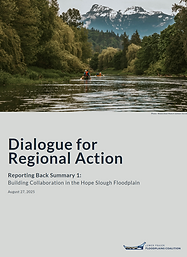


Dialogue for Regional Action
Reporting Back Summary 1:
Building Collaboration in the
Hope Slough Floodplain
August 27, 2025
Farmers come together in a dedicated space to discuss flood risk and restoration—surfacing strong interest in collaboration and the real-world barriers that need to be addressed.
.
Dialogue for Regional Action
Reporting Back Summary 2:
Building Collaboration in the Hope Slough Floodplain
November 19, 2025
Farmers and First Nations take the next step together, identifying shared priorities and practical solutions to restore the Hope Slough and reduce flood risk.
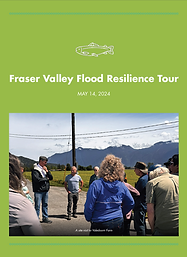
Fraser Valley Flood Resilience Tour
May 14, 2024
A field tour across the Fraser Valley showing on-farm flood impacts, nature-based restoration projects, and opportunities for collaboration between farmers, First Nations, and government partners.
